
Some subjects are too large for one blog post.
The future of coatings is one of them.
So is sustainability.
So is the question of how we keep making beautiful things without pretending that the way we make them does not matter.
This is not a lecture. It is not a sermon. And it is certainly not a claim that one coating system can save the planet.
But material choices matter.
They matter to designers.
They matter to applicators.
They matter to clients.
They matter to the people who work with products every day, often for years.
And they matter because the built environment is made from thousands of choices, some large, some small, all adding up.
From solvent-based to water-based
Metalier began with a solvent-based binder.
It worked. It created beautiful real metal finishes. But it was also a product of its time.
The binder was polyester-based, and it had a smell that announced itself before you even reached the workshop. In the early days, when we were running the original Metalier workshop, we became so used to that smell that we stopped noticing it.
That is a slightly alarming sentence to write.
But it is true.
When you are around something every day, it can become normal. That does not mean it is ideal. It just means you have adjusted to it.
I remember once being called out to the shop floor just before customers were due to arrive in the adjoining office. I was in a hurry. I did not put on my PPE properly. I stirred the polyester binder for perhaps 30 seconds without a mask.
Then I went back into the office for the meeting and found I could not speak properly.
That was frightening.
It was also a very sharp reminder that beautiful finishes are not the only measure of a product.
How a product is made matters.
How it is applied matters.
What it asks of the people using it matters.
Better chemistry, better working conditions
The move to water-based coatings is not just a marketing phrase.
It changes the experience of working with a product.
A water-based system reduces solvent smell. It reduces the reliance on harsh chemical clean-up. It improves the working environment for applicators. It makes on-site work more manageable. It helps create healthier interior spaces once the coating is cured.
That matters.
A finish should not ask people to choose between beauty and breathing.
Of course, professional application still requires proper care, skill, preparation and protective equipment. Water-based does not mean careless. It does not mean magic. It does not mean rules disappear.
But it does mean the starting point is better.
And in coatings, that is important.
The future of coatings is not only technical
It is tempting to talk about the future of coatings as though it is only a technical subject.
VOC levels.
Durability.
Adhesion.
Clean-up.
Compliance.
All of that matters. Very much.
But there is a human side too.
There are the people applying the product.
There are the designers trying to specify responsibly.
There are the contractors who have to manage programmes and sites.
There are clients who want beautiful spaces but increasingly want to know what those spaces are made from.
And there are all of us, living with the consequences of industrial choices made over many generations.
The Industrial Revolution began in the late 1700s and gathered pace through the 1800s. Since then, humans have become extraordinarily good at making things. We have also become extraordinarily good at making problems.
The challenge now is to keep the creativity, innovation and usefulness, while reducing the harm.
Why this matters to Metalier
Metalier is a real liquid metal coating system.
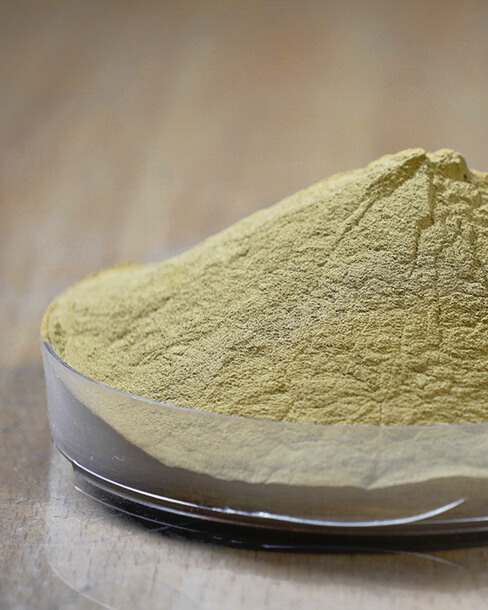
That means it is not paint pretending to be metal. It is made with genuine metal powders and applied as a coating to create a real metal surface.
Our water-based system allows designers, architects and applicators to achieve the beauty of metal with a cleaner and more responsible approach.
It can be used across residential, hospitality and commercial projects. It can be applied to many different substrates. It can be sanded, polished, textured or patinated. It can create finishes that are warm, refined, aged, dramatic or quietly architectural.
But just as importantly, it gives us a better way to do it.
The system is designed to reduce VOCs, improve application conditions and avoid the heavy solvent character of older technologies.
That is not a small thing.
It is the kind of improvement that should become normal.
No halos required
I do not think sustainability should require a halo.
Nor do I think every discussion about environmental responsibility has to sound grim.
We still need beauty.
We still need design.
We still need craft.
We still need materials that make people stop and say, “That is wonderful.”
But we also need to ask better questions.
What is this made from?
How is it applied?
What does it mean for the people working with it?
Can it be done with less harm?
Can the product still perform beautifully?
Can it still excite designers?
Can it still create something special?
For Metalier, the answer is yes.
Small choices, repeated often
No single product fixes everything.
But better choices, repeated often, do make a difference.
A water-based coating system is one of those choices.
It is better for the applicator.
Better for the working environment.
Better for clients who care about healthier interiors.
Better for designers who want a sustainability story they can stand behind.
And better for the future of coatings.
That is why water-based matters.
Not because it is fashionable.
Not because it gives us something tidy to say in a brochure.
But because the way we make beautiful things should be part of the beauty itself.
Talk to us about water-based liquid metal finishes
Metalier’s water-based liquid metal system is designed for designers, architects, applicators and clients who want real metal beauty with a more responsible approach.
To learn more, visit the Metalier Resources page or contact us to discuss your project.