
When I was a child, one of my jobs was polishing the brass plate at our front door.
I loathed it.
Having finally polished the thing until it gleamed, I became extremely irritated if anybody in the family actually walked on it. They were instructed to step over it.
Visitors, unfortunately, were less easily controlled.
Decades later, I appear not to have escaped the problem.
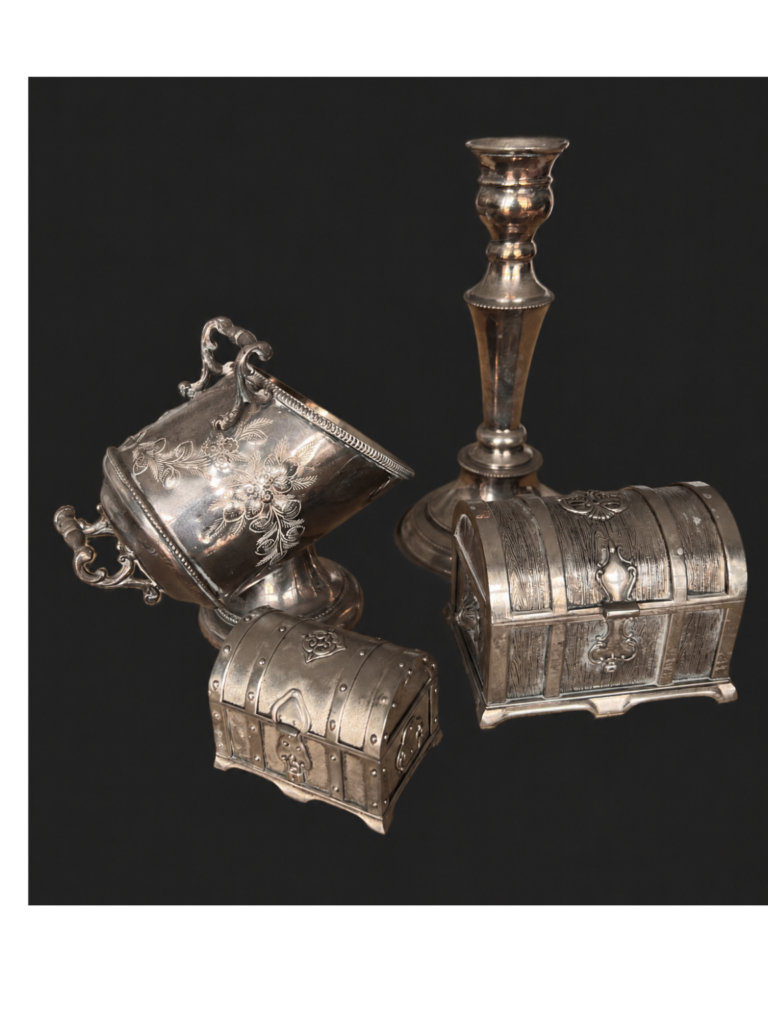
I recently brought several beautiful old silver pieces out of storage. They are now sitting in front of me looking increasingly reproachful because they need polishing.
And they have made me think again about something we deal with constantly at Metalier:
When does ageing make metal more beautiful — and when does it simply need a clean?
Real metal changes
One of the characteristics of real metal is that it responds to its environment.
Silver tarnishes. Copper changes colour. Brass darkens. Iron oxidises.
Sometimes we spend considerable time removing those changes.
At other times, designers deliberately try to create them.
That contradiction is part of what makes metal so interesting.
Look at my silver pieces and you can see several stages of ageing at once. Some areas remain bright. Others have become grey. The candlestick has developed surprisingly warm brown and golden tones.
Personally, I want to polish them.
Another person might look at exactly the same colouring and say, “Don’t touch them.”
Neither response is necessarily wrong.
Two churches, two very different copper surfaces

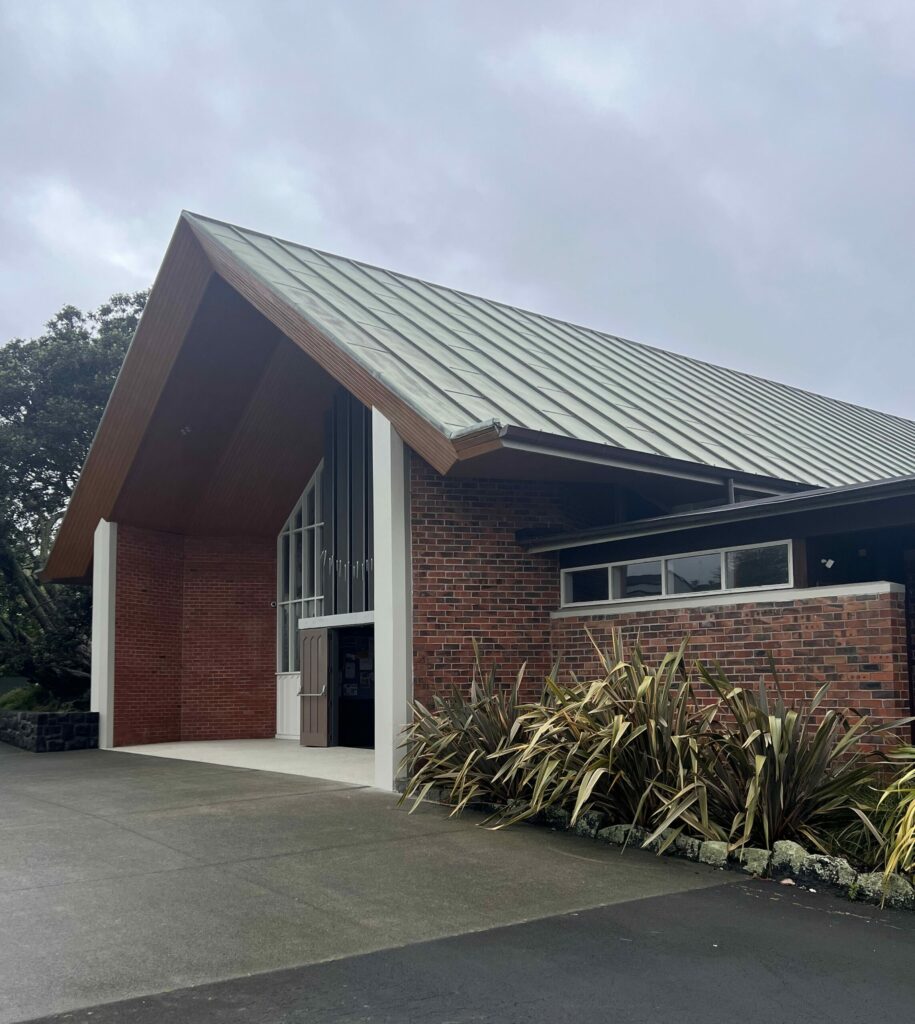
There are two churches close to one another near me in Auckland.
One has a tall copper-covered steeple that has aged to a deep, dark brown.
Almost opposite it, another church has a large copper roof that has developed the familiar green-grey appearance we often associate with aged copper.
They experience essentially the same Auckland weather.
Yet they look completely different.
Why?
There probably isn’t one simple answer.
Copper does not move instantly from bright new metal to green. It changes through stages as the surface reacts with its surroundings, and the speed and appearance of that change can be influenced by moisture, exposure, airflow, contaminants, the age and composition of the metal and the physical form of the surface.
Even orientation matters.
A broad roof receives and holds rain differently from a steep church spire that sheds water rapidly.
I cannot stand on the pavement and tell you precisely which factor produced the difference between these two buildings.
But I can say that they make a wonderful illustration of one of the fundamental truths about natural metal:
leave it exposed, and nature becomes part of the finishing process.
There is another small Metalier connection in the All Saints image: the open entrance doors below the copper roof are finished in Metalier aged bronze.
Patina can be accidental – or intentional
In decorative metal work, we do not always wait for nature.
Patinas can be deliberately created to bring forward colours and effects that might otherwise take years to appear — or may never develop in quite the way the designer wants.
That gives the designer and applicator far more control.
A newly applied metal surface can be aged, darkened, mottled or altered to create a finish that already carries character and depth.
But even then, real metal continues to behave like real metal.
And that raises another question.
When do you stop the process?
Sometimes continued change is exactly what is wanted.
A designer may choose to let the metal develop naturally and accept that its appearance will evolve.
Sometimes the finish has reached precisely the point the designer wants — and further change would spoil it.
That is when protection becomes important.
Metalier’s system allows a chosen metal appearance to be protected with a clear coat where the design requires it, rather than simply leaving the surface to continue reacting with its environment.
That subject deserves an article of its own, because choosing whether to protect metal — and how — is not quite as simple as “shiny good, tarnished bad.”
My silver proves that.
I am quite capable of admiring beautiful patina professionally while reaching for the silver polish at home.The beauty of real metal
The beauty of real metal
Perhaps the real distinction is not between new metal and old metal.
It is between change that contributes to the design and change that does not.
A rich brown copper tower can be beautiful.
A green copper roof can be beautiful.
An intentionally aged decorative finish can be beautiful.
And an old silver candlestick can look thoroughly neglected to its owner while someone else admires every mark on it.
Real metal has character because it is not static.
Understanding how it changes – and deciding when to encourage that change and when to stop it – is part of working with the material well.
Next week, I may even have polished the silver.
Then we can talk about how to keep metal looking the way you want it to.