
We humans spend an extraordinary amount of time and money trying not to look older.
We colour it, cream it, smooth it, lift it and occasionally pretend the whole thing simply isn’t happening.
Metal has rather more confidence.
In the metal world, age can add depth, variation and character. And aged metal finishes don’t necessarily have to wait decades to acquire it.
With the right patina and the right technique, ageing can become part of the design.
When silver decides to grow old beautifully
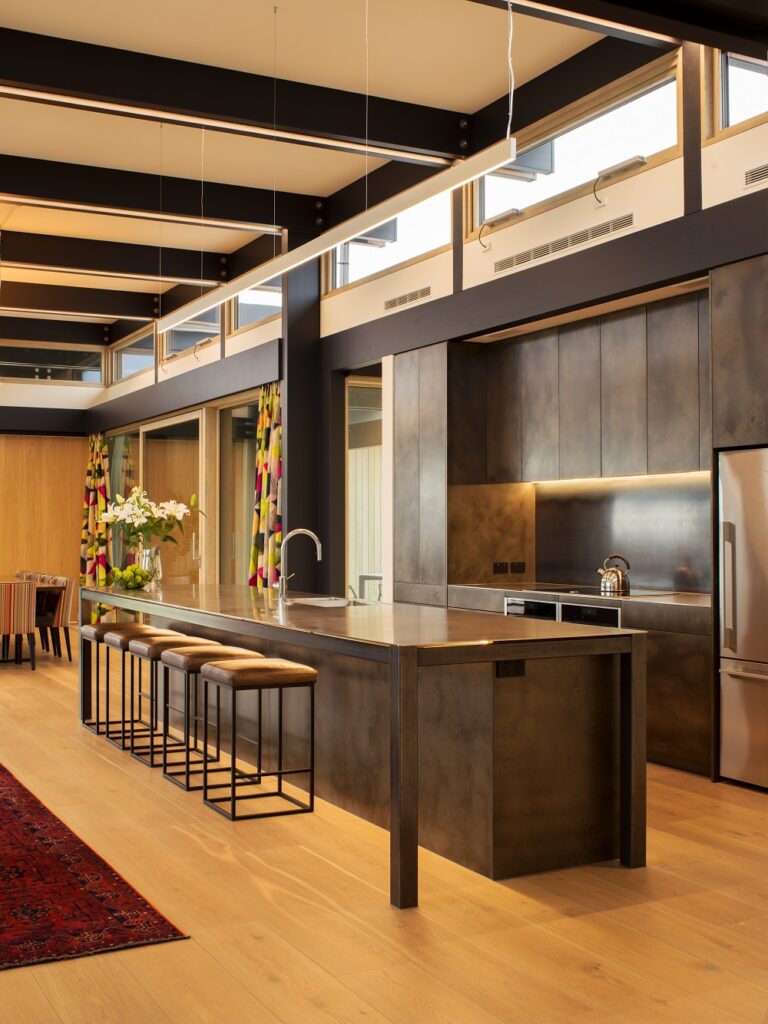
The Metalier finish in this Wanaka kitchen began with nickel silver.
Yet the finished surface reads almost like a dark, aged bronze.
That transformation is one of the things I love about patina. The underlying metal remains important, but the finished character can become something quite unexpected.
Colour deepens. Tonal variation develops. Highlights and darker areas give the surface movement.
The aim is not simply to make something look “old”.
It is to give the metal depth, history and individuality.
M16: the sixteenth attempt
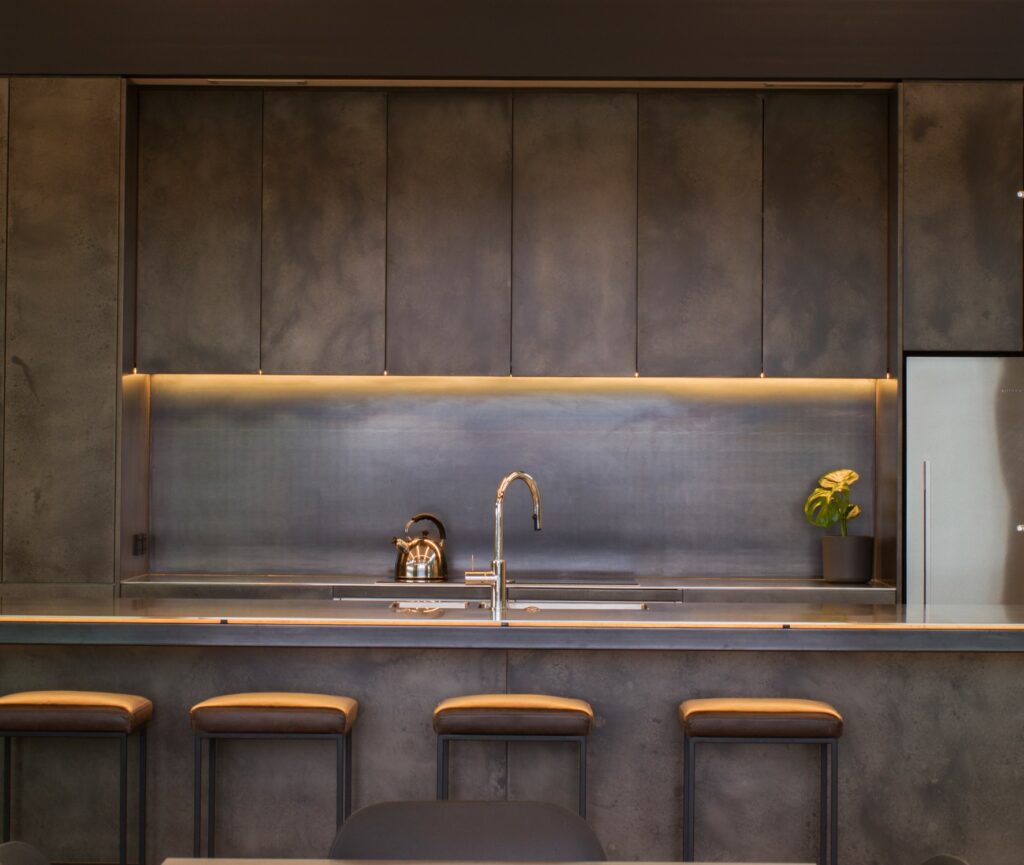
One of Metalier’s own patinas is our M16 Antiquing Black Patina.
The name sounds considerably more mysterious than its history.
It is called M16 because it was the sixteenth patina formulation we tried.
Sometimes product development is less glamorous than the finished surface.
But that little piece of Metalier history matters.
Over more than 20 years, we have developed not only the liquid metal system itself, but the techniques and supporting products that allow designers and skilled applicators to create very different outcomes from it.
M16 is one of those tools.
It can be used to darken a metal surface and build the aged, antiqued character required for a particular design.
Age doesn’t have to happen evenly
Patination also does not have to cover a surface uniformly.
One effect I particularly like is ombré.
A finish can graduate from darker at the bottom to lighter at the top, creating the impression that the surface changes almost imperceptibly as the eye travels across it.
But there is no rule saying the graduation must be vertical.
Dark to light could move from left to right, across a curve or around a form.
That is where patina stops being simply an ageing technique and becomes another design tool.
Aged metal finishes are designed, not accidental
Naturally aged metal has its own beauty.
But in an architectural or interior project, designers usually need rather more control than simply waiting to see what happens.
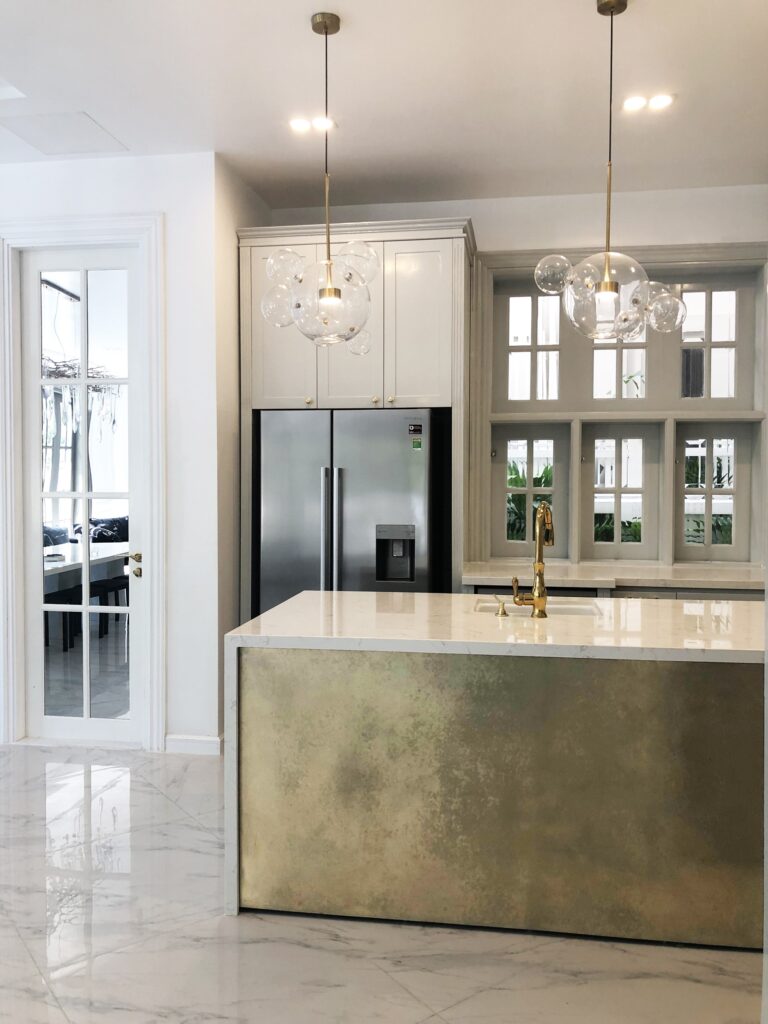
The metal, patina, application technique, degree of polishing and intended variation all influence the finished result.
Metalier develops the material possibilities.
Skilled application turns those possibilities into the particular surface the project requires.
That combination means one metal can take on many personalities – from bright and contemporary to dark, mottled, antiqued or softly aged.
Perhaps metal has the right idea
There is something rather appealing about a material that becomes more interesting when you give it a few signs of age.
Perhaps we humans could learn something from it.
Although I’m not quite ready to cancel the moisturiser.