
Last week I wrote about patina: when ageing adds beauty, and when it doesn’t.
This week is the natural sequel.
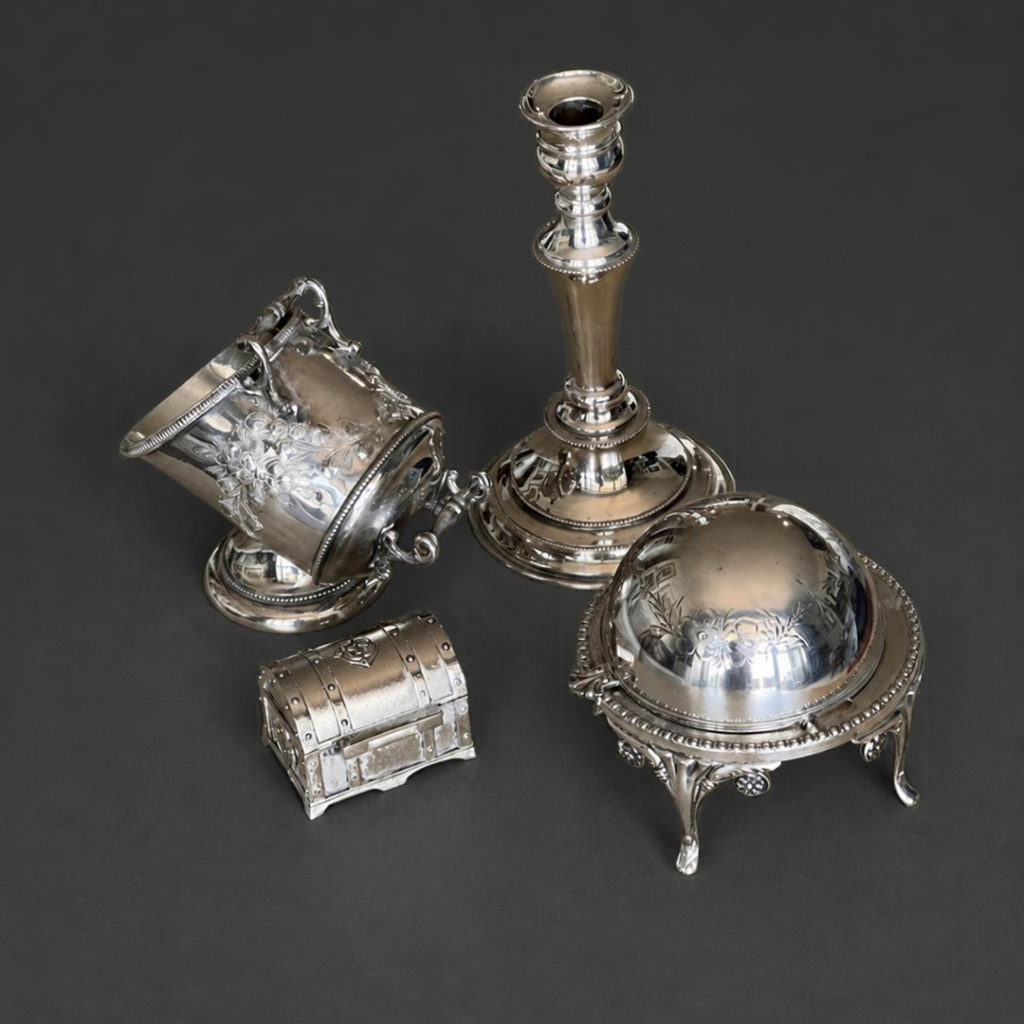
I have now polished the silver.
Several pieces I had brought out of storage were looking at me rather reproachfully, and I finally gave in. They now gleam again, and I am very pleased with myself.
But polishing them has brought me to the next question:
What do you do when you want metal to stay like that?
The pleasure – and nuisance – of polished metal
There is something deeply satisfying about polished metal.
Silver, brass and copper all have a richness and reflectivity that only really come alive when the surface is clean and the light can move across it properly.
When polished, metal feels crisp, clear and celebratory. It catches light. It sharpens detail. It looks cared for.
The trouble, of course, is that real metal does not simply hold still.
Silver tarnishes. Brass dulls. Copper darkens. Time, handling, air and moisture all play their part.
Which means that polished metal can either become:
- a pleasure you maintain;
- or a maintenance burden you come to resent.
I still can’t quite clear-coat my own silver
Here is my confession.
I have been tempted by the idea of clear-coating my silver pieces.
From a practical point of view, it makes perfect sense. Polish them once, protect them, and save myself the repeated labour.
And yet I can’t quite bring myself to do it.
Somehow, with silver pieces like these, the ritual still feels part of the ownership. Polishing them is mildly annoying, but also oddly satisfying. It belongs to the object and its history.
So I shall probably go on polishing them every month or two and congratulating myself each time.
But that is a personal choice.
It is not the choice most people want to make with architectural or decorative metal finishes.
Sometimes the finish has already arrived
In decorative metal work, there are times when the whole point is to let the material evolve.
Patina can deepen, shift and add character over time.
But there are also times when the finish has reached exactly the point the designer wants.
The polished appearance is not a stage on the way to something else.
It is the intended result.
In those cases, continued change is not a benefit. It is a problem.
That is where protection matters.
Clear coat is about preserving the chosen appearance
A clear coat is not there to make metal less real.
It is there to protect the chosen look.
If you have a polished metal finish, an aged bronze tone, or a carefully developed patina, a clear coat can help preserve that appearance and reduce the need for repeated maintenance.
That matters especially in:
- high-touch areas;
- exterior applications;
- commercial interiors;
- and anywhere the design depends on the finish looking consistent over time.
In other words, clear coating is not an argument against real metal.
It is often what allows real metal to be used more practically.
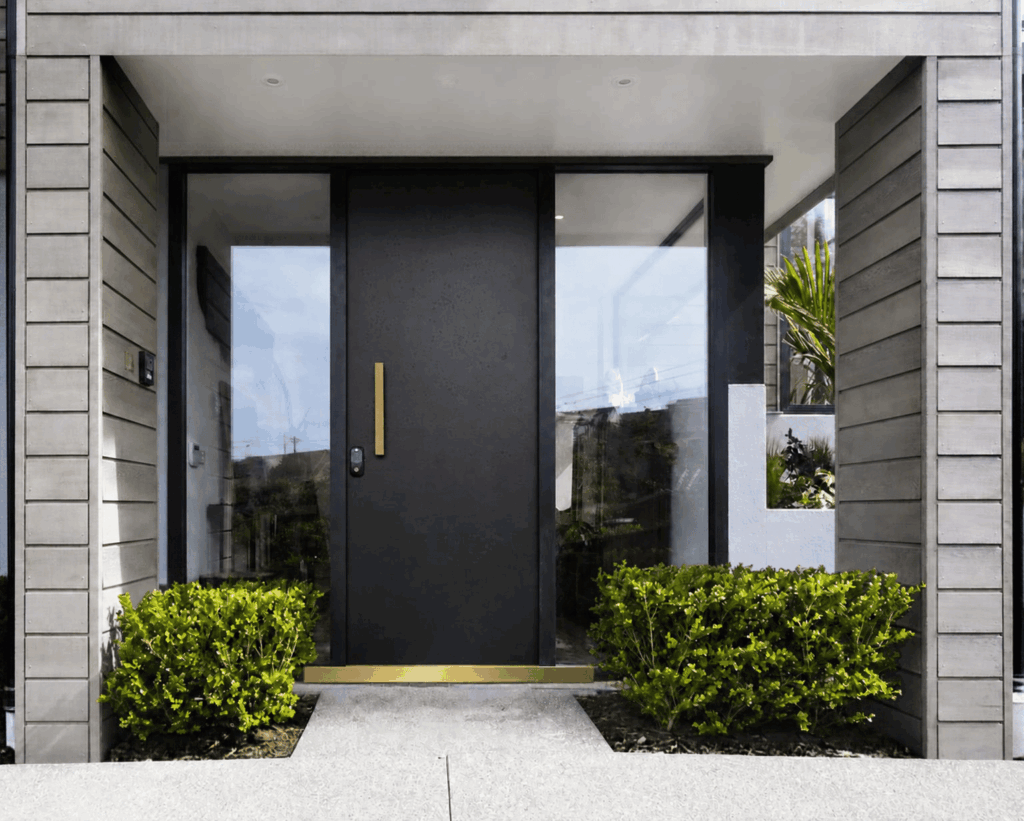
A polished brass footplate: beautiful when it gleams, considerably less charming when you are the person who has to keep it that way.
The brass plate at the front door
This brings me back to a childhood grievance.
When I was a child, one of my jobs was polishing the brass plate at our front door. I loathed it.
Once I had finally got it polished, I would get cross if members of my family stepped on it. They were firmly instructed to step over it.
Visitors were less obedient.
If I had had access then to a good clear coat for polished brass, I would have embraced it with enthusiasm.
And that remains a very good example.
There are objects you are happy to polish again and again because that maintenance feels part of their charm.
Then there are objects – such as a brass door plate – where you would much rather preserve the freshly polished look and save yourself the effort.
Design is partly about deciding what should change
This is really the heart of it.
Working with real metal involves deciding not only how the finish should look when it is first created, but also what should happen next.
Do you want it to:
- continue evolving naturally?
- remain polished and bright?
- retain a carefully created patina?
- resist touch, weather or handling?
Those are design decisions as much as technical ones.
And they affect the system you choose.
A practical role for clear coats
At Metalier, clear coats are an important part of the system because they allow the designer or applicator to say:
This is the point at which I want the finish to stop changing.
That may be because the finish is polished.
It may be because the patina is perfect.
It may be because the project is in a location where durability and ease of maintenance matter just as much as appearance.
Whatever the reason, the principle is the same.
Sometimes the beauty of real metal lies in its ability to change.
And sometimes the beauty is worth preserving.
If that means I continue polishing my own silver while recommending clear coat for somebody else’s brass door plate, I can live with the contradiction.