
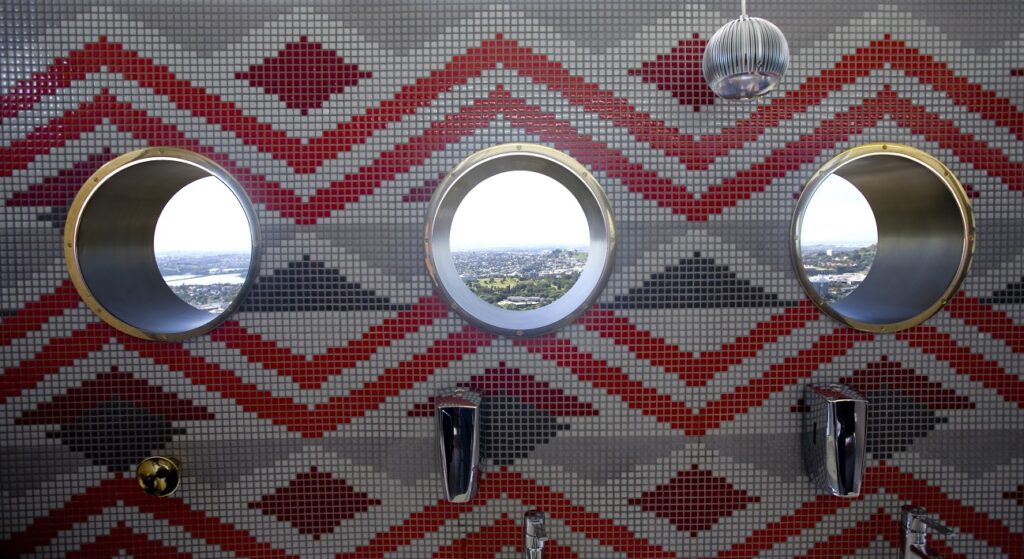
Even bathroom windows can be instructive
Sometimes a design lesson turns up where you least expect it.
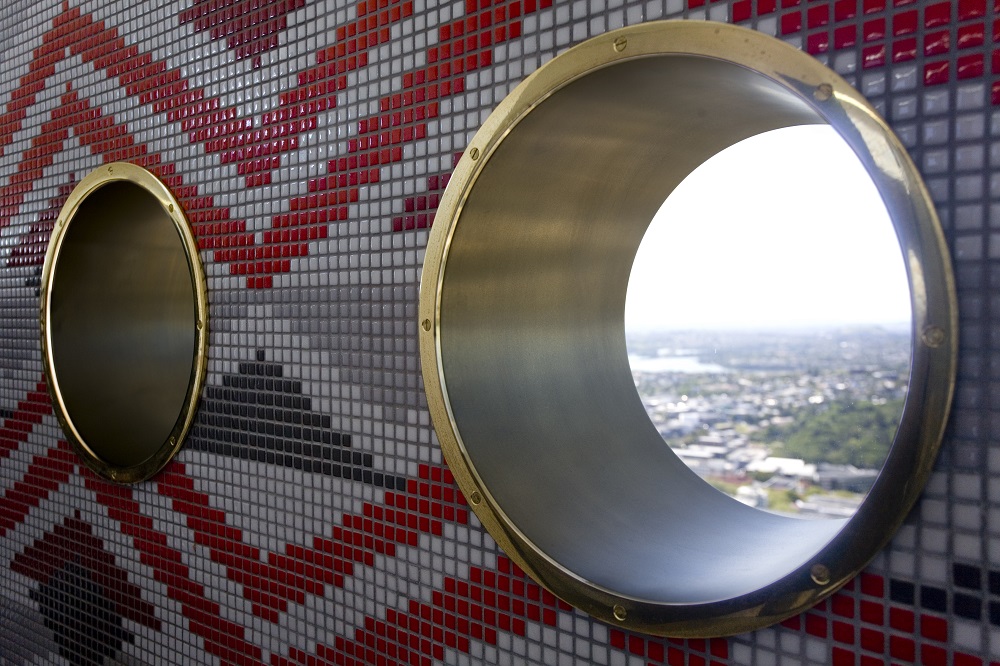
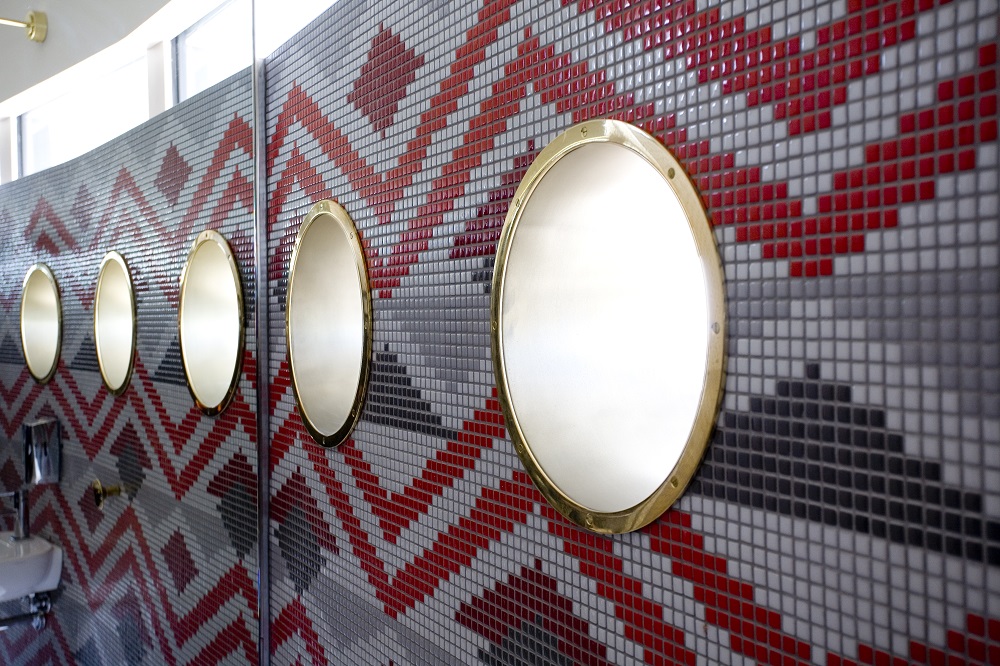
These porthole windows at Auckland’s Sugar Club are in the bathrooms. They are also a rather splendid little demonstration of what happens when two very different ways of using real metal are allowed to work together.
The rims are sheet brass. The centres are Metalier.
Neither is pretending to be the other. And that is rather the point.
Real metal. Two different ways.
Sheet metal has qualities that make it exactly right for certain applications. It can be cut, formed, folded and fabricated into beautiful architectural details.
Metalier approaches metal differently.
Metalier is a water-based liquid metal coating system made with real metal powders. Rather than fabricating a surface from sheet, the coating can be applied to a wide variety of shapes and substrates and then polished, textured or patinated to develop the character of metal.
At the Sugar Club, the two approaches sit comfortably side by side.
The brass rims celebrate fabricated metal. The Metalier surfaces demonstrate what coating technology can make possible.
Good design does not always ask one material to defeat another.
Sometimes it simply asks each one to do what it does best.
The future isn’t either/or
There is a temptation whenever a new material technology appears to talk about what it can replace.
We think that misses much of the fun.
The future of decorative surfaces is more interesting than that.
It lies in giving architects and designers a broader palette of genuine materials, processes and technologies, and the freedom to combine them intelligently.
Sheet metal can be perfect.
A water-based liquid metal coating can be perfect.
And, as these rather instructive bathroom windows demonstrate, they can be even more interesting together.
Original Metalier
Metalier has been developing liquid metal coating technology for more than 20 years.
That experience sits inside the product.
It lies in our understanding of real metal powders, binder technology, substrates, polishing, texture, patination and the many variables that influence a finished metal surface.
So when we talk about Original Metalier, we are not using “original” as a challenge to somebody else.
We mean the Metalier system that has been developed, refined and used over more than two decades.
A product with a history – and one that continues to evolve.
Why water-based technology matters
An important part of that evolution has been Metalier’s water-based binder technology.
Real metal is at the heart of the surface, but how that metal is delivered matters too.
For architects and designers increasingly interested not only in how a material looks but also in how it is made, specified and used, water-based coating technology deserves attention.
It is one of the reasons we believe Metalier belongs as much in conversations about the future of decorative coatings as it does in conversations about beautiful metal finishes.
More freedom than a flat sheet
Liquid metal coating also changes the question from:
What can we make out of metal?
to:
What can we make look and behave like a real metal surface?
Walls. Joinery. Furniture. Curves. Architectural details. Complex shapes. Large surfaces.
Because the metal is applied as a coating system, designers are not confined by the geometry of a metal sheet.
And the finished appearance is not fixed either.
Metalier can be polished, textured, patinated and developed in response to a particular design intent.
That combination of material technology and specialist expertise is where much of its creative potential lies.
One system. Many possibilities.
Metalier is not one particular “look”.
Our Signature Finishes provide inspiration and demonstrate what the system can achieve, but they are not the limits of it.
The product provides the real metal, the technology and the possibilities.
Specialist expertise then brings an individual finish to life through colour, texture, polish, patina and application.
That is why two Metalier projects can look remarkably different from one another while beginning with the same coating technology.
A view worth looking through
Perhaps that is why we like these portholes so much.
Yes, they frame rather good views of Auckland.
But look at the windows themselves and there is another view altogether.
Traditional sheet brass and water-based liquid metal coating technology, sitting quite happily together.
No contest. No imitation. No need for one to displace the other.
Just two ways of working with real metal, each doing what it does best.
Even bathroom windows can be instructive.